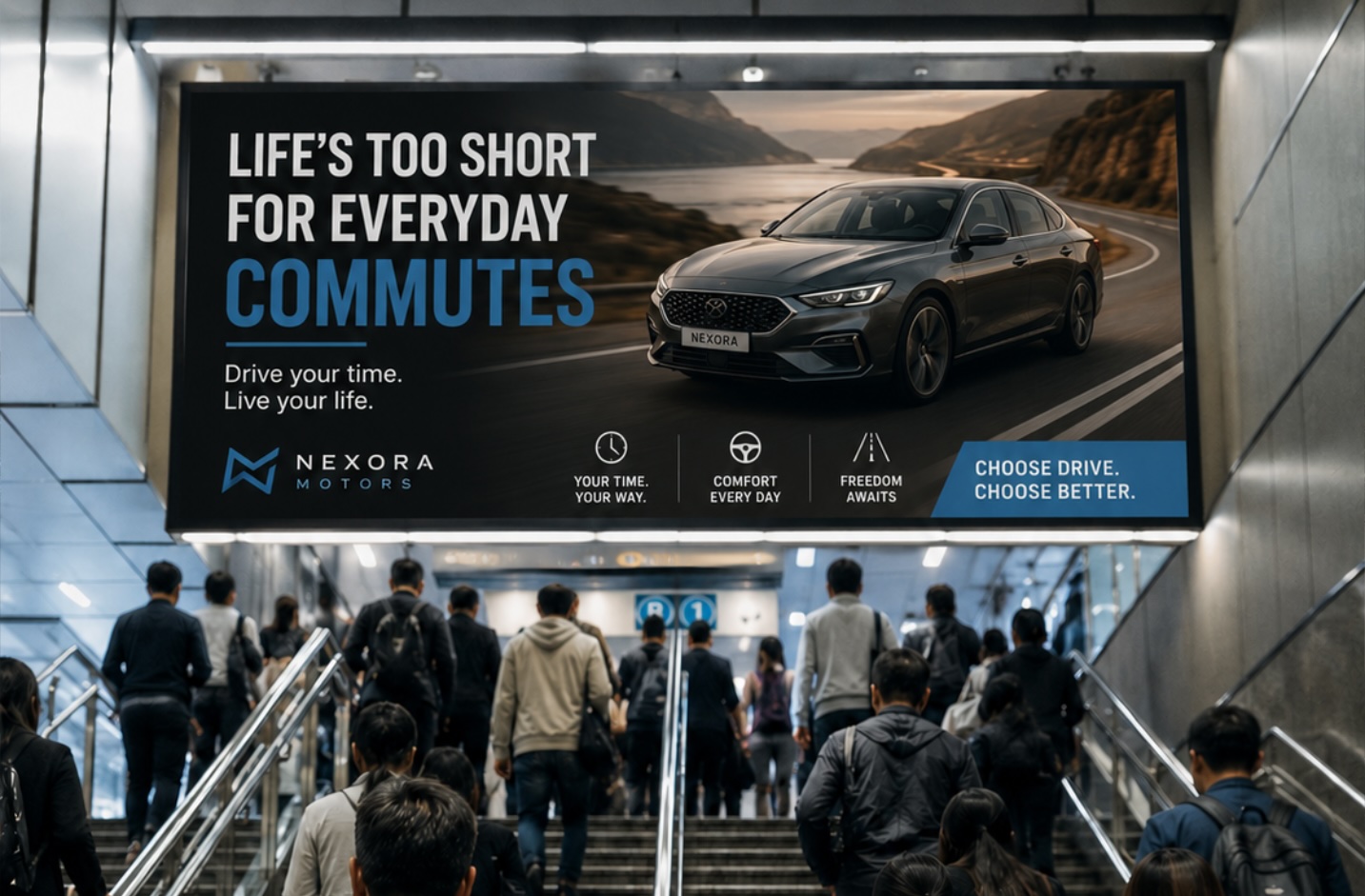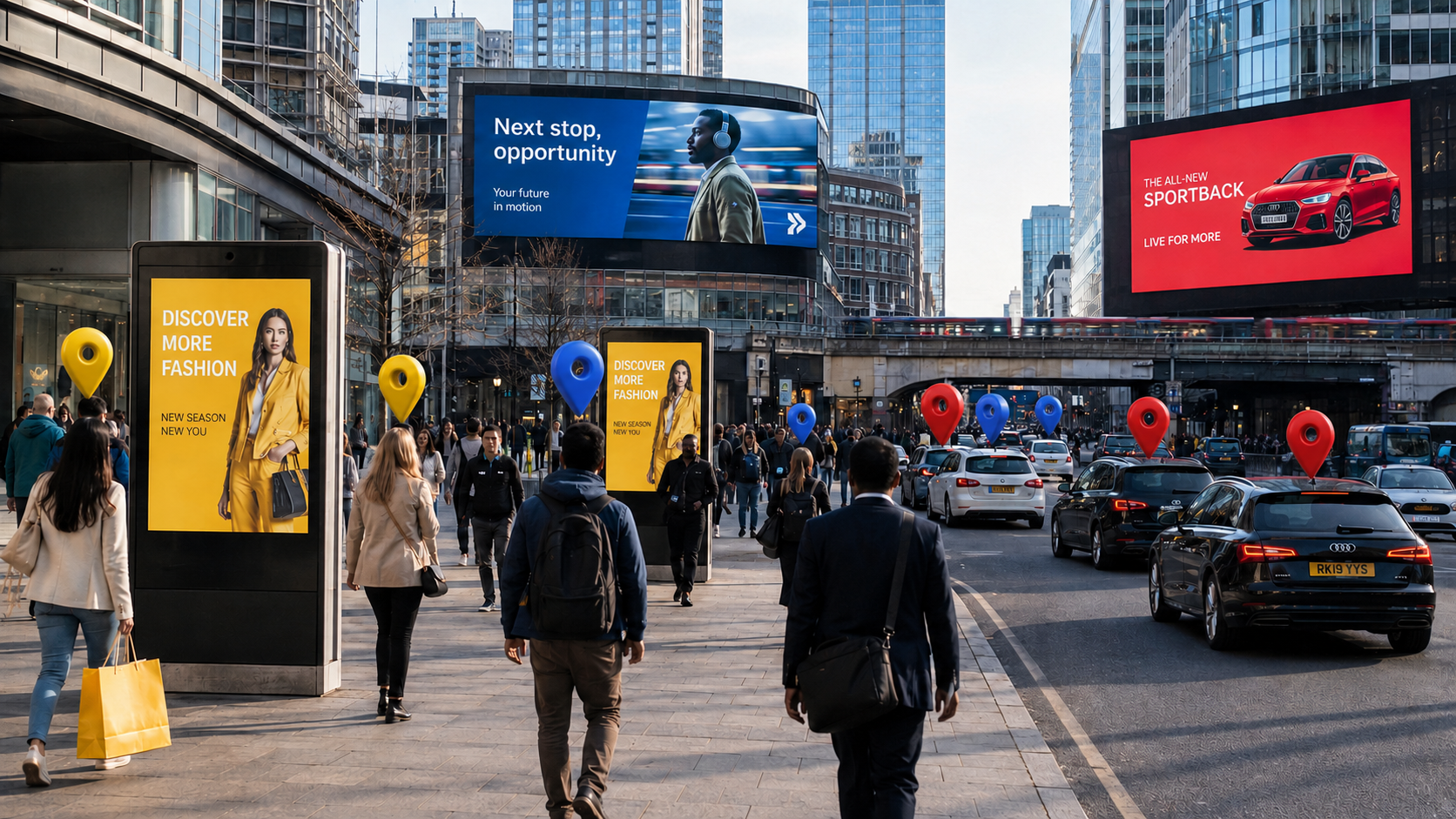

Here's something that might change how you think about outdoor advertising.
The strongest OOH advertising strategies don't start with locations. They start with people.
Most campaigns do it the other way around: find the busiest spots, buy the biggest boards, and hope the right eyes land on them. That approach can work, but it's also how you end up spending real money reaching people who will never buy from you.
The smarter move is to flip the question. Instead of "where's the most traffic?", ask "where does our ideal customer actually spend their time and when?"
That's the core idea behind behaviour-led OOH advertising, and once you see it, it's hard to unsee.
It means planning your outdoor advertising campaign around how real people move through their real lives, their commutes, their routines, and their habits, rather than just targeting wherever foot traffic happens to be highest.
Demographics are a starting point. Knowing your audience is "professionals aged 30–45" tells you who you're after. But it doesn't tell you where to find them, or when.
Are they commuting through the CBD? Stopping at a fuel station on the way to work? Squeezing in a gym session before 8am? Grabbing lunch near an office tower? Each of those moments is a different OOH placement opportunity.
Behaviour-led OOH advertising connects those everyday routines to smarter media decisions. Digital OOH makes it even easier.
Once you've mapped out where your audience goes and when, the media planning gets a lot more intuitive.
Take a brand targeting health-conscious consumers. Rather than buying a generic high-traffic billboard, a behaviour-led approach might focus on gym screens during morning and evening workout windows, combined with street furniture in the residential areas where that same audience walks or runs. The placement matches the lifestyle. The timing matches the mindset.
That's the difference between an ad that lands and one that's just… there.
Timing within the day is just as important as location. A café promoting breakfast deals has no business burning budget at 9pm. A fitness brand targeting early risers doesn't need heavy spend on Friday afternoons. Scheduling your digital out-of-home advertising to match your audience's natural daily rhythm is one of the simplest and most underused levers in out-of-home campaign planning.
Let's say you run a local pizza chain and you want to drive more dinner orders on weeknights.
The broad approach would be to book a couple of high-traffic billboards somewhere central and call it a day. You'd get eyeballs. Whether those eyeballs belong to hungry people who live nearby and are about to make a dinner decision is anyone's guess.
A behaviour-led digital out-of-home strategy looks different. You'd identify the commuter routes that feed into your store catchment areas and schedule billboard ads to run between 3pm and 6pm, Tuesday to Friday, when people are heading home and dinner is starting to cross their minds. You might also add digital out-of-home screens at nearby fuel stations and train stations along those same routes, where your audience is stationary, mildly bored, and very open to the suggestion of not cooking tonight.
Same product. Same budget. Totally different result, because the placement and timing are doing real work instead of just filling space.
It's tempting to buy as many sites as the budget will stretch to. A long list of locations looks impressive. But spreading spend too thin usually means your audience sees the ad once, if at all, which isn't enough for it to stick.
Behaviour-led OOH planning is about quality over quantity. A tighter selection of well-chosen placements, run with enough frequency that people actually register the brand, tends to outperform a broader buy with less focus every time.
This is exactly the kind of campaign CAASie is built for. Instead of locking into fixed packages or negotiating lengthy contracts, you can hand-pick individual digital screens, set precisely the hours you want your ads to run, and only pay for the plays that actually deliver. If something isn't performing, you adjust it in real time. No lock-ins, no wasted spend, no assumptions that can't be undone.
Wherever you're planning your next outdoor campaign, these questions are worth working through first:
Effective out-of-home advertising isn't about being everywhere. It's about being in the right place, at the right time, in front of the right person. Start with behaviour, and the rest of the strategy tends to follow.